

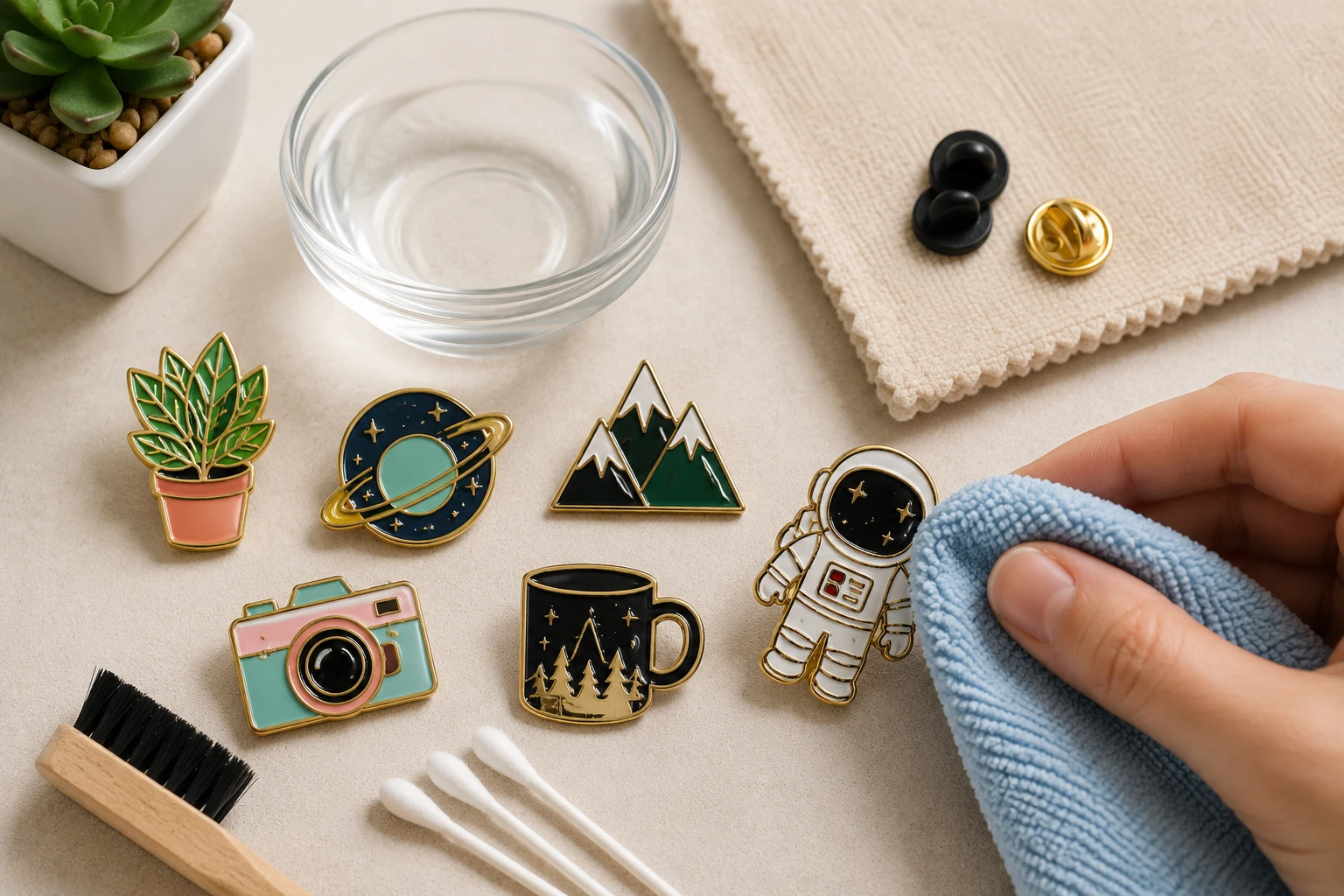
From representing your company to celebrating an achievement or fandom, your enamel pins are mini masterpieces. But no matter how amazing your personalised enamel pins are, they won’t look fresh if they are not taken care of accordingly. Here is everything that you should know to make sure your pins stay as fresh as the day they left the factory for years to come.
Canada’s leading maker of custom enamel pins and patches, Custom Patch Makers has worked with hundreds of collectors, businesses, and artists from across the country. “How do I take care of it?” is one of the most commonly asked questions following “How do I design my pin?”. This is precisely what this guide aims to answer.
Understand Your Pin Type: Soft vs. Hard Enamel
Understanding the composition of your pins is essential before beginning any maintenance procedures. Enamel pins are not all the same, and each type requires a different method of maintenance.
| Feature | Hard Enamel Pins | Soft Enamel Pins |
| Surface texture | Smooth, polished flat | Raised metal lines, recessed color |
| Durability | Higher scratch-resistant | Moderate more prone to wear |
| Can it be polished? | Yes carefully | Not recommended |
| Water exposure | Very brief only | Avoid entirely |
| Best for display? | Excellent | Great with protection |
Hard enamel pins are more resilient to daily wear because of their glass-like surface, which has been heated and polished flat. Soft enamel pins are lovely, but they need to be handled more carefully because of their textured, dimensional surface and recessed colour fillings. Understanding your kind serves as the basis for all subsequent care decisions.
Daily Management: The First Line of Protection
The majority of pin damage is caused by users’ and collectors’ minor, daily behaviours rather than catastrophic incidents. Over time, your pins gradually deteriorate due to oils on your fingertips, airborne dust, and friction against other surfaces.
- Always use dry, clean hands when handling pins. Dust is drawn to metal and enamel surfaces by skin oils, which progressively degrade the finish.
- To prevent smudges on the enamel surface, hold pins by their edges rather than their faces.
- Never let your pins fall on a hard surface. Enamel can be chipped or the metal base bent by even a brief fall against hardwood or tile.
- Before washing the clothes to which pins are connected, remove them. Enamel finishes are harmed by spin cycles and detergents.
- The metal edges and pin points of one pin will harm the enamel surface of another, so avoid stacking unwrapped pins together.
How to Clean Enamel Pins Without Damaging Them
A little care goes a long way in keeping your enamel pins looking bright and polished. With regular, gentle cleaning, your favorite pins can stay in great condition for years. Here’s a simple and safe way to clean them:
Take Off the Backing
Start by removing the butterfly clutch or rubber backing from the pin. This makes cleaning easier and helps prevent the backing from getting bent or misplaced.
Dust It Off First
Before using water, wipe the pin gently with a soft microfiber cloth. This removes dust, lint, and fingerprints without scratching the surface.
Test Before You Clean
If your pin has stubborn dirt or marks, test your cleaning method on a tiny hidden area first. It’s always better to be safe, especially with collectible or older pins.
Use a Damp Cloth
Lightly dampen the cloth with warm water and gently wipe the pin clean. Don’t soak the pin or leave it wet for too long. Once cleaned, dry it right away with a soft cloth.
Add Shine to Hard Enamel Pins
For hard enamel pins, a tiny amount of non-abrasive polishing cream can help bring back their shine. Apply it carefully with a cotton swab and buff gently.
Let It Dry Completely
Before putting the backing back on or storing the pin, make sure it’s completely dry. This helps prevent moisture damage and keeps the metal looking its best.
A Few Things to Avoid
To protect your enamel pins, never use:
- Bleach or harsh household cleaners
- Vinegar or citrus-based solutions
- Rubbing alcohol
- Rough scrubbing pads
- Stiff-bristled brushes
These can fade the enamel, scratch the surface, or damage the metal plating.
What About Older or Stained Pins?
Vintage pins or thrift finds sometimes have stains that are harder to remove. Professionals may occasionally use diluted ammonia for deep cleaning, but this should only be done very carefully and as a last resort. If the pin is valuable or sentimental, it’s best to check with the original maker before trying stronger cleaning methods.
Wise Storage Advice for Collectors of Enamel Pins
Enamel pins may be kept glossy, colourful, and scratch-free for years with proper storage. Moisture, heat, sunshine, and contact with other pins are the main dangers to enamel pins.
Hold Pins in:
- A dark, dry, and chilly area
- Glass-covered display case
- Pin binders with velvet or foam inserts
- Padded jewellery cases or shadow boxes
Refrain from:
- Direct sunlight can cause colour fading.
- Humid environments that lead to rust or tarnishing
- Pins can scratch one another if they are stored together without protection.
- Direct pin placement on wood surfaces could eventually harm metal plating.
Additional Advice
To absorb moisture and aid in preventing rust and tarnish, place silica gel packets inside storage containers.
Safely Displaying Enamel Pins
While showcasing your collection of enamel pins is enjoyable, careful placement keeps pins appearing brand new for many years.
Easy Display Advice
- To avoid fading, keep pinboards out of direct sunlight.
- Keep displays away from air conditioners and heaters.
- To prevent scratching, leave enough spacing between pins.
- In humid environments, use dehumidifiers or silica gel packs.
- For superior dust prevention, go for glass-front display cabinets.
The ideal display arrangement maintains your collection’s visibility, organisation, and security.
How to Keep Your Pins Safe While Travelling
Most collectors suffer their most devastating pin losses and damage while travelling. Small metal objects find themselves in surprisingly adverse situations, such as backpack pockets, suitcase compartments, and crammed convention bags.
- To keep pins from rubbing against one another or other objects, use a special pin travel binder with separate foam or velvet holes.
- Store pins should never be kept in a bag pocket with cash, keys, or other metal objects.
- When using coats or bags with locking backs instead of ordinary butterfly clasps, use secure pins since locking pin backs are much more secure for active use.
- When preparing for conferences or travel, bubble wrap individual expensive pins in tiny ziplock bags.
- When travelling, check your pins at the end of each day. If you find a loose back or a minor scratch early on, you can avoid more serious damage down the road.
Taking Care of Pin Backs & Clasps
When people think about enamel pin care, they usually focus on the design and finish — but the pin back matters just as much. A loose or damaged clasp can easily lead to a lost pin, especially if you wear your collection often.
Common Types of Pin Backs
- Butterfly Clasps
These are the most common pin-backs. Over time, the metal wings can loosen with regular use, so it’s a good idea to check them occasionally and replace them if they stop gripping tightly. - Rubber or Silicone Backs
Soft and comfortable, but they can stretch, crack, or fall off over time. If you wear your pins regularly, replacing them every year or two helps keep your pins secure. - Locking Pin Backs
These are the safest and most reliable options, especially for valuable or favorite pins. Many collectors switch to locking backs right away because they stay secure and greatly reduce the risk of losing a pin. - Don’t Forget the Pin Post
Check the metal post on the back of your pin from time to time. If it bends slightly, you can carefully straighten it with needle-nose pliers. However, if you notice cracks or damage, it’s best to have it repaired professionally.
A little attention to the small details can go a long way in protecting your enamel pin collection.
Frequently Asked Questions
Can enamel pins go in the dishwasher or washing machine?
No. Heat, water, and strong detergents can damage the enamel and metal plating. Always remove pins before washing clothes.
How do I remove rust from an enamel pin?
Light rust on the back or pin post can sometimes be cleaned carefully with diluted ammonia and dried immediately. Severe rust may need professional repair.
Can I wear enamel pins in the rain?
A little rain is usually fine for hard enamel pins if they are dried quickly. Soft enamel pins are more sensitive to moisture, so avoid too much water exposure.
How often should enamel pins be cleaned?
Dust displayed pins every few weeks with a microfiber cloth. Pins worn regularly should be wiped after use and cleaned gently every month or two.
Where can I order custom enamel pins in Canada?
Custom Patch Makers creates high-quality custom hard and soft enamel pins for businesses, events, artists, and collectors across Canada.
Keep Your Enamel Pins Looking Their Best
Taking care of enamel pins is actually pretty simple. A little regular maintenance — like handling them with clean hands, storing them in a cool and dry place, cleaning them gently, and checking the pin backs from time to time can keep your collection looking bright and beautiful for years.
Avoid harsh chemicals, too much moisture, and direct sunlight, as these can damage both the enamel and metal finish over time. With the right care, your favorite pins can stay just as vibrant as the day you got them.
Whether you’re growing a personal collection or creating custom enamel pins for your business, team, or event, Custom Patch Makers is here to help from design and production to long-term pin care.